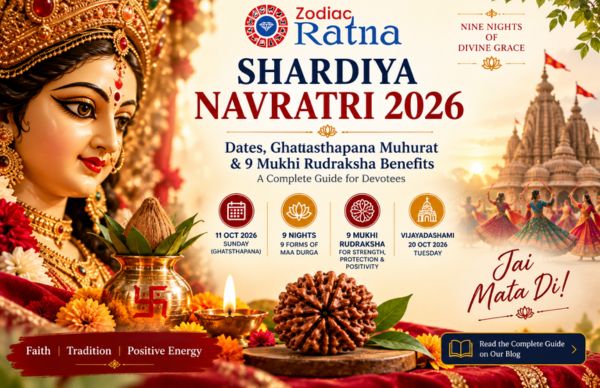
Sharadiya Navratri 2026, also known as Sharad Navratri, Maha Navratri, or Durga Navratri, is one of the most sacred Hindu festivals dedicated to Maa Durga and Shakti, the divine feminine energy.
Celebrated over nine nights and ten days, Navratri brings together devotion, fasting, Durga Puja, mantra chanting, meditation, Durga Saptashati Paath, Garba, Dandiya, and worship of the nine forms of Maa Durga known as Navdurga.
In 2026, Shardiya Navratri begins on Sunday, 11 October 2026, with Ghatasthapana and Maa Shailputri Puja. The nine-day observance continues through Maha Navami, followed by Vijayadashami (Dussehra) on Tuesday, 20 October 2026.
For devotees who follow traditional Rudraksha practices, Navratri also holds special significance because the 9 Mukhi Rudraksha is traditionally associated with Maa Durga and the nine forms of Navdurga.
Whether you are looking for Navratri 2026 dates, Ghatasthapana Muhurat, Navdurga names, Navratri Puja Vidhi, fasting guidance, or information about 9 Mukhi Rudraksha, this guide brings everything together in one place.
Shardiya Navratri 2026 at a Glance
Shardiya Navratri 2026 begins on Sunday, 11 October 2026. Ghatasthapana marks the traditional beginning of Navratri worship, while the festival concludes with Maha Navami followed by Vijayadashami on Tuesday, 20 October 2026.
| Details | Information |
| Festival | Shardiya Navratri 2026 |
| Also Known As | Sharad Navratri, Maha Navratri, Durga Navratri |
| Start Date | Sunday, 11 October 2026 |
| Main Deity | Maa Durga / Shakti |
| First Navdurga | Maa Shailputri |
| Ghatasthapana | 11 October 2026 |
| Maha Navami | 19 October 2026* |
| Vijayadashami / Dussehra | Tuesday, 20 October 2026 |
*Ashtami and Navami observances can vary according to the local Panchang and family tradition.
What is Shardiya Navratri?
Shardiya Navratri is a nine-night Hindu festival dedicated to Maa Durga and the different manifestations of Shakti. The word Navratri literally refers to nine nights. During these sacred days, devotees worship one form of Maa Durga each day and follow different spiritual practices according to their family and regional traditions.
Common Navratri practices include:
- Navratri fasting
- Ghatasthapana
- Maa Durga Puja
- Navdurga worship
- Durga Saptashati Paath
- Mantra Japa
- Meditation
- Kanya Puja
- Garba and Dandiya
- Charity and devotional activities
Navratri is therefore not only a festival of celebration but also a period of devotion, discipline, self-reflection, and spiritual renewal.
Why is Shardiya Navratri Celebrated?
Navratri celebrates the divine power of Shakti and the victory of righteousness over destructive forces. The festival is traditionally associated with the worship of Maa Durga in her various forms. Devotees turn towards prayer, fasting, meditation, and devotional practices while seeking blessings for courage, strength, wisdom, protection, peace, and spiritual growth.
The final day, Vijayadashami, represents the victory of good over evil and is celebrated as Dussehra in many parts of India. The way Navratri is celebrated differs across regions. In eastern India, Durga Puja is a major celebration, while Gujarat is particularly famous for Garba and Dandiya Raas.
Shardiya Navratri 2026 Dates & Navdurga Worship Calendar
During the nine days of Navratri, devotees traditionally worship the nine forms of Maa Durga known as Navdurga.
| Navratri Day | Date | Tithi / Observance |
| Day 1 | 11 October | Ghatasthapana, Maa Shailputri Puja |
| Day 2 | 12 October | Maa Brahmacharini Puja |
| Day 3 | 13 October | Maa Chandraghanta Puja |
| Day 4 | 14 October | Maa Kushmanda Puja |
| Day 5 | 15 October | Maa Skandamata Puja |
| Day 6 | 16 October | Maa Katyayani Puja |
| Day 7 | 17 October | Maa Kalaratri Puja |
| Day 8 | 18 October | Saptami continues |
| Day 9 | 19 October | Durga Ashtami, Maa Mahagauri Puja, Sandhi Puja, Maha Navami |
| Day 10 | 20 October | Navami Homa, Parana & Vijayadashami |
*Ashtami and Navami observances may vary according to the local Panchang.
The Nine Forms of Maa Durga: Navdurga
- Maa Shailputri: Worshipped on the first day of Navratri, Maa Shailputri is traditionally associated with strength, stability, purity, and devotion.
- Maa Brahmacharini: The second form represents penance, discipline, patience, determination, and devotion.
- Maa Chandraghanta: Maa Chandraghanta is traditionally associated with courage, peace, serenity, and protection.
- Maa Kushmanda: The fourth form is associated with creation, vitality, positivity, and abundance.
- Maa Skandamata: As the mother of Lord Skanda, Maa Skandamata represents motherhood, compassion, protection, and harmony.
- Maa Katyayani: Maa Katyayani is the warrior form of Maa Durga and is traditionally associated with courage, righteousness, and strength.
- Maa Kalaratri: The fierce form of Maa Durga, Maa Kalaratri is traditionally associated with protection and overcoming darkness and fear.
- Maa Mahagauri: Maa Mahagauri represents purity, peace, compassion, and spiritual clarity.
- Maa Siddhidatri: The ninth form, Maa Siddhidatri, is traditionally regarded as the giver of siddhis and spiritual accomplishments.
Ghatasthapana Muhurat 2026: Kalash Sthapana
Ghatasthapana, also known as Kalash Sthapana, is traditionally performed at the beginning of Navratri and marks the invocation of Goddess Shakti.
The correct Ghatasthapana Muhurat 2026 depends on factors such as the local sunrise, Tithi, and Panchang. Therefore, the timing can differ between cities.
For 11 October 2026, early local calculations indicate:
| Location | Ghatasthapana Muhurat |
| Ahmedabad, Gujarat | 6:35 AM – 10:29 AM (Abhijit Muhurat: 12:03 PM to 12:50 PM) |
| Surat, Gujarat | 6:33 AM – 10:28 AM |
| Ankleshwar, Gujarat | 6:32 AM – 10:27 AM |
Important Note: Ghatasthapana is a Panchang-based ritual. Because Muhurat calculations can vary by location and tradition, devotees should verify the final timing for their city before performing Kalash Sthapana.
Shardiya Navratri 2026 in Gujarat
Gujarat has a unique and vibrant Navratri tradition, particularly known for Garba and Dandiya Raas. During the nine nights of Navratri, devotees gather to celebrate Shakti through devotional music, traditional dance, colourful attire, and community celebrations.
Alongside Garba and Dandiya, many families also observe:
- Navratri Vrat
- Maa Amba worship
- Ghatasthapana
- Daily diya and puja
- Mantra chanting
- Durga Saptashati Paath
- Ashtami and Navami rituals
- Kanya Puja
- Charity and Prasad distribution
For devotees in Gujarat, Navratri is therefore both a deeply spiritual observance and a major cultural celebration.
Navratri Puja Vidhi at Home
Devotees can observe Navratri Puja at home according to their family and regional traditions. A simple devotional routine may include:
- Step 1: Clean the Puja Space: Clean the worship area and prepare a dedicated space for Maa Durga.
- Step 2: Perform Ghatasthapana: Perform Kalash Sthapana during the appropriate Muhurat according to your local Panchang and family tradition.
- Step 3: Worship Maa Durga: Place an image or idol of Maa Durga and offer flowers, incense, diya, fruits, and traditional Prasad.
- Step 4: Chant Maa Durga Mantras: Devotees may chant traditional Durga mantras according to their spiritual practice. One commonly chanted mantra is: “Om Dum Durgaye Namah”
- Step 5: Recite or Listen to Durga Saptashati: Devotees may read or listen to Durga Saptashati, also known as Devi Mahatmya or Chandi Path, as part of their Navratri worship.
- Step 6: Perform Aarti: Complete the daily worship with Maa Durga Aarti and prayers for strength, peace, wisdom, protection, and spiritual growth.
Navratri Vrat & Fasting Guide
Fasting is an important practice for many devotees during Navratri. Traditional fasting practices vary between families and regions. Some devotees observe a complete fast, while others consume specific foods permitted during their tradition.
Commonly consumed fasting foods may include:
- Fruits and milk
- Nuts and dry fruits
- Sabudana
- Samak rice
- Kuttu (Buckwheat flour)
- Singhara (Water chestnut flour)
Devotees should follow the fasting rules appropriate to their health, family tradition, and spiritual practice. The purpose of Navratri fasting is traditionally connected with discipline, devotion, self-control, and spiritual focus, rather than simply food restriction.
9 Mukhi Rudraksha: Significance & Connection with Maa Durga
The 9 Mukhi Rudraksha, also known as Nav Mukhi or Nau Mukhi Rudraksha, has nine natural mukhi lines on its surface and is traditionally associated with Goddess Durga and Navdurga.
Because Shardiya Navratri is dedicated to the nine manifestations of Maa Durga, the 9 Mukhi Rudraksha holds particular spiritual relevance for devotees who follow traditional Rudraksha practices.
Different Rudraksha and Jyotish traditions may associate it with different planetary influences. Therefore, if you are choosing a 9 Mukhi Rudraksha for an astrological purpose, consult a knowledgeable practitioner who follows the tradition relevant to you.
9 Mukhi Rudraksha Benefits According to Traditional Beliefs
According to traditional Hindu and Rudraksha practices, the 9 Mukhi Rudraksha is associated with:
- Divine Protection: Traditionally worn by devotees seeking protection from negativity, fear, and unwanted influences.
- Courage & Inner Strength: Its association with Maa Durga makes it traditionally relevant for devotees seeking greater courage, confidence, and determination.
- Spiritual Growth: The bead may be incorporated into meditation, mantra japa, Durga Puja, and other devotional practices.
- Overcoming Fear & Challenges: Traditional beliefs associate the 9 Mukhi Rudraksha with inner strength and the ability to approach difficult situations with greater courage and composure.
- Devotion to Maa Durga: Its traditional connection with Navdurga makes it particularly meaningful during Shardiya Navratri.
9 Mukhi Rudraksha Benefits, Power & Mantra: https://www.zodiacratna.com/9-mukhi-rudraksha-benefits-power-mantra/
Disclaimer: The benefits described here are based on traditional Hindu, spiritual, and astrological beliefs. They should not be considered scientifically proven medical, psychological, or financial guarantees.
Who Can Wear 9 Mukhi Rudraksha?
According to traditional Rudraksha practices, the 9 Mukhi Rudraksha may be worn by devotees who feel spiritually connected with Maa Durga or wish to incorporate the bead into their meditation, mantra japa, and devotional practices.
It is traditionally associated with qualities such as:
- Courage and inner strength
- Divine protection
- Spiritual discipline and devotion
- Overcoming fear
There is no universal rule that applies identically to every devotee. Wearing practices can vary according to one’s Guru, family tradition, or spiritual lineage.
8 Mukhi vs 9 Mukhi Rudraksha: Which One Should You Choose?
If you are deciding between an 8 Mukhi and 9 Mukhi Rudraksha, their traditional associations are different:
| Feature | 8 Mukhi Rudraksha | 9 Mukhi Rudraksha |
| Traditional Deity Association | Lord Ganesha | Goddess Durga |
| Traditional Focus | Obstacles, wisdom, focus | Protection, courage, strength |
| Associated Festival | Ganesh Chaturthi | Sharadiya Navratri |
| Spiritual Relevance | Ganesha worship | Navdurga / Maa Durga worship |
The right choice depends on your spiritual intention, tradition, and personal requirements. Read our detailed 8 Mukhi Rudraksha Guide to learn more about its distinct benefits.
How to Energise & Wear 9 Mukhi Rudraksha During Navratri
Devotees following traditional Rudraksha practices may choose Ghatasthapana or another auspicious Navratri day to purify, worship, and wear their 9 Mukhi Rudraksha.
- Purify the Rudraksha: Gently clean the bead with clean water or Gangajal. Avoid prolonged soaking and dry it carefully with a soft cloth.
- Prepare the Puja Altar: Place a clean red or yellow cloth before Maa Durga. Keep the Rudraksha, flowers, sandalwood, incense, diya, and other traditional offerings ready.
- Perform Maa Durga Puja: Place the Rudraksha before Maa Durga and offer flowers, sandalwood, incense, and other offerings according to your family tradition.
- Chant the Durga Mantra: A commonly chanted mantra is: “Om Dum Durgaye Namah”
(Devotees may traditionally chant the mantra 108 times with devotion and concentration. If your Guru or family tradition prescribes a specific Rudraksha mantra, follow that practice.) - Perform Aarti: Complete the worship with Maa Durga Aarti and pray for courage, strength, protection, wisdom, peace, and spiritual growth.
- Wear the Rudraksha: After the traditional purification and worship, the Rudraksha may be worn in a suitable silk or cotton thread or metal setting according to personal preference and spiritual tradition.
9 Mukhi Rudraksha Mantra
A commonly used mantra associated with Maa Durga is:
“Om Dum Durgaye Namah”
Devotees may chant the mantra during Navratri Puja, meditation, or Rudraksha worship. The number of repetitions and specific mantra practice can vary according to spiritual lineage. Those following a Guru or family tradition should give priority to that guidance.
9 Mukhi Rudraksha & Durga Saptashati During Navratri
The traditional connection between 9 Mukhi Rudraksha and Navratri comes from its association with Maa Durga and the nine forms of Navdurga. During these nine sacred nights, devotees may incorporate Rudraksha into their spiritual routine alongside:
- Maa Durga Puja
- Navratri mantra japa
- Meditation
- Durga Saptashati Paath (Devi Mahatmya / Chandi Path)
- Daily prayer
For devotees interested in traditional recitations, you can explore our dedicated Durga Saptashati Puja Service.
What is Durga Saptashati?
Durga Saptashati, also known as Devi Mahatmya or Chandi Path, is a sacred text describing the glory and power of Goddess Durga. It is traditionally recited or listened to during Navratri by devotees as part of their spiritual practice and worship of Maa Durga.
Those undertaking a complete traditional recitation should follow the appropriate method and guidance of their Guru, priest, or family tradition.
Navratri Spiritual Practices for Devotees
Navratri can be observed in many different ways depending on personal faith and tradition. Some devotees choose to:
- Observe Navratri Vrat
- Perform daily Maa Durga Puja
- Chant Durga mantras and read Durga Saptashati
- Meditate and visit temples
- Perform Kanya Puja
- Participate in Garba and Dandiya
- Donate food or essential items
- Practice self-discipline and spiritual reflection
The essence of Navratri is devotion and sincerity rather than grandeur.
Frequently Asked Questions About Shardiya Navratri 2026
Common questions about Shardiya Navratri 2026, Ghatasthapana Muhurat, 9 Mukhi Rudraksha, Goddess Durga, Durga Saptashati, Ghatasthapana, Dussehra, and traditional Navratri practices.
When is Shardiya Navratri 2026?
Shardiya Navratri 2026 begins on Sunday, 11 October 2026. The observance continues through Maha Navami, followed by Vijayadashami on Tuesday, 20 October 2026.
What is the Ghatasthapana Muhurat for Navratri 2026?
Ghatasthapana Muhurat varies according to location, sunrise, Tithi, and Panchang calculations. Early estimates list approximately 6:35 AM to 10:29 AM for Ahmedabad on 11 October 2026. Always verify the final timing using a reliable local Panchang.
Which Rudraksha is traditionally associated with Goddess Durga?
The 9 Mukhi Rudraksha is traditionally associated with Goddess Durga and Navdurga, making it particularly relevant to devotees during Shardiya Navratri.
Can women wear 9 Mukhi Rudraksha?
Yes. Rudraksha is traditionally worn by devotees regardless of gender. Specific practices can vary according to family, spiritual, or religious tradition.
What is the difference between Nepali and Indonesian 9 Mukhi Rudraksha?
Nepali Rudraksha is generally larger and has more prominent natural grooves, while Indonesian Rudraksha is usually smaller and may have a comparatively smoother appearance. However, size alone does not establish authenticity.
Is 9 Mukhi Rudraksha associated with Rahu or Ketu?
Different Rudraksha and Jyotish traditions provide different planetary associations. Some traditions associate the 9 Mukhi Rudraksha with Ketu, while others may follow different associations. Maa Durga is traditionally regarded as its presiding deity. If you are selecting a Rudraksha specifically as a planetary remedy, consult a qualified practitioner familiar with the tradition you follow.
What are the traditional benefits of 9 Mukhi Rudraksha?
According to traditional beliefs, 9 Mukhi Rudraksha is associated with courage, protection, inner strength, spiritual growth, overcoming fear, and devotion to Maa Durga.
Can I wear 9 Mukhi Rudraksha during Navratri?
Yes. Devotees following traditional Rudraksha practices may choose Shardiya Navratri as an auspicious period to purify, worship, energise, and wear a 9 Mukhi Rudraksha.
Which mantra is used for 9 Mukhi Rudraksha?
A commonly chanted Durga mantra is “Om Dum Durgaye Namah.” Specific Rudraksha traditions may prescribe additional or particular Mukhi mantras.
What is Durga Saptashati?
Durga Saptashati, also known as Devi Mahatmya or Chandi Path, is a sacred text describing the glory and power of Goddess Durga. It is traditionally recited or listened to during Navratri.
What is Ghatasthapana?
Ghatasthapana, also called Kalash Sthapana, is the traditional opening ritual of Navratri in which a sacred Kalash is established as part of invoking Goddess Shakti.
When is Dussehra in 2026?
Vijayadashami, commonly known as Dussehra, will be observed on Tuesday, 20 October 2026.
Which day is best to wear 9 Mukhi Rudraksha during Navratri?
Devotees following traditional practices may choose Ghatasthapana or another auspicious Navratri day to purify and worship the Rudraksha before wearing it. The appropriate day can vary according to one’s Panchang, Guru, or family tradition.
Can children wear 9 Mukhi Rudraksha?
Rudraksha-wearing practices for children can vary according to family tradition and spiritual guidance. Parents may consult a knowledgeable practitioner before selecting a Rudraksha specifically for a child.
How should 9 Mukhi Rudraksha be cleaned?
It can be gently cleaned with clean water and dried with a soft cloth. Prolonged soaking should be avoided.
Related Navratri & Rudraksha Guides
Explore more from Zodiac Ratna:
- 9 Mukhi Rudraksha – Authentic Rudraksha Collection
- Complete Rudraksha Guide & Health Benefits
- Durga Saptashati Puja Services
- 8 Mukhi Rudraksha Guide
Why Choose Zodiac Ratna for Rudraksha?
At Zodiac Ratna, we focus on helping devotees make informed choices when exploring traditional spiritual products and practices.
Our dedicated collections include:
- Authentic & Lab-Certified Rudraksha Beads
- Rudraksha Malas & Rosaries
- Natural Gemstones Collection
- Sphatik Products & Mala
- Sacred Shree Yantra Collection
When choosing a Rudraksha, we encourage customers to pay attention to natural bead formation, clear mukhi lines, seller reputation, and appropriate certification where available rather than relying solely on size or appearance. Discover our authentic offerings on the Zodiac Ratna Homepage.
Related Navratri & Rudraksha Guides
Explore more from Zodiac Ratna:
- 9 Mukhi Rudraksha – Authentic Rudraksha Collection
- 9 Mukhi Rudraksha Benefits, Power & Mantra
- Durga Saptashati Puja Services
- 8 Mukhi Rudraksha Guide
Conclusion: Celebrate Shardiya Navratri 2026 with Devotion
Shardiya Navratri 2026 is a sacred period dedicated to Maa Durga, Navdurga, Shakti, devotion, discipline, and spiritual reflection.
Beginning on 11 October 2026, the festival brings together ancient traditions such as Ghatasthapana, Navdurga Puja, Durga Saptashati Paath, mantra japa, fasting, meditation, Kanya Puja, Garba, and Dandiya.
For devotees who follow traditional Rudraksha practices, the 9 Mukhi Rudraksha holds special significance because of its traditional association with Maa Durga and the nine forms of Navdurga.
Whether you observe Navratri through fasting, prayer, Maa Durga Puja, meditation, Durga Saptashati, mantra chanting, or community celebrations, these nine sacred nights provide an opportunity to cultivate courage, devotion, inner strength, positivity, and spiritual awareness.
If you are planning to purchase a 9 Mukhi Rudraksha, choose a natural bead from a reputable source and consider appropriate laboratory certification where available.
May Maa Durga bless you and your family with strength, protection, peace, prosperity, and spiritual wisdom.
Jai Mata Di!
Team Zodiac Ratna