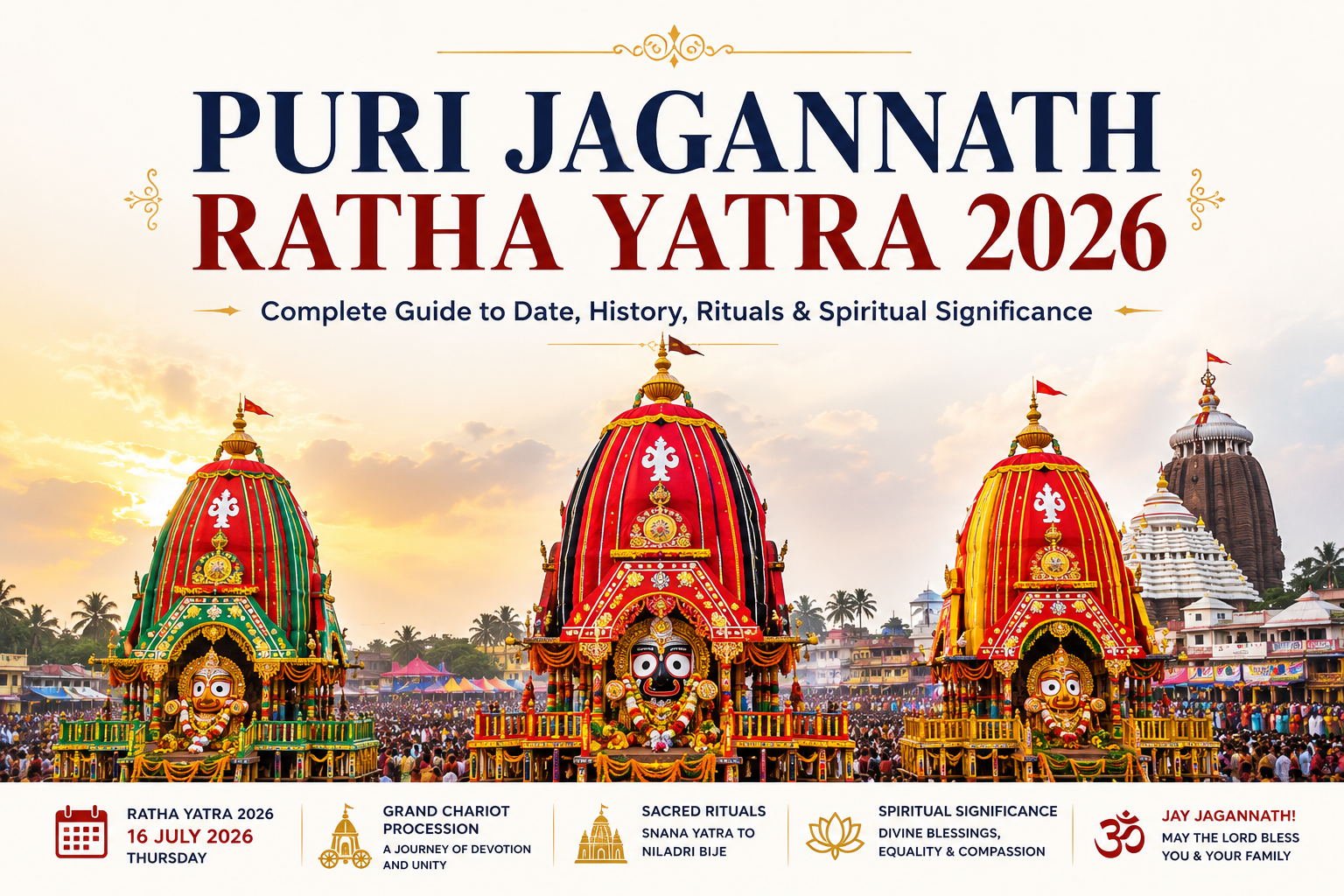
The Puri Jagannath Ratha Yatra is one of the oldest, grandest, and most spiritually significant Hindu festivals celebrated across the world. Every year, millions of devotees gather in the sacred city of Puri, Odisha, to witness the magnificent procession of Lord Jagannath, Lord Balabhadra, and Devi Subhadra as they leave the revered Jagannath Temple and travel on beautifully crafted wooden chariots to the Gundicha Temple.
Unlike most temple festivals where devotees visit the deity inside the sanctum, the Jagannath Ratha Yatra is unique because the Lord Himself comes out to bless everyone. This timeless tradition symbolises compassion, equality, humility, and the universal accessibility of divine grace. Regardless of caste, community, nationality, or background, every devotee has the opportunity to receive the blessings of Lord Jagannath during this sacred journey.
For many devotees, witnessing the Ratha Yatra, pulling the chariot ropes, chanting the Lord’s holy names, or simply offering sincere prayers is considered a deeply spiritual experience that strengthens devotion and inspires inner transformation.
Whether you are planning to visit Puri during Ratha Yatra 2026, wish to understand the history of this iconic festival, or want to celebrate from home with your family, this complete guide will help you explore its rituals, significance, traditions, and spiritual teachings.
What is Puri Jagannath Ratha Yatra?
Puri Jagannath Ratha Yatra, also known as the Jagannath Chariot Festival, is an annual Hindu festival dedicated to Lord Jagannath, a revered form of Lord Vishnu and Lord Krishna. During the festival, Lord Jagannath, along with His elder brother Lord Balabhadra and sister Devi Subhadra, is ceremonially taken out of the Jagannath Temple and placed on three massive wooden chariots.
The deities travel approximately three kilometres to the Gundicha Temple, where they remain for several days before returning to the Jagannath Temple during the Bahuda Yatra.
This sacred journey is much more than a ceremonial procession. It represents the Lord’s unconditional love for humanity and His willingness to step out of the temple to bless every devotee equally.
For centuries, saints, philosophers, and devotees have regarded the Puri Jagannath Ratha Yatra as a living expression of Bhakti (devotion), Seva (selfless service), and universal compassion.
Quick Answer: Why is Jagannath Ratha Yatra Celebrated?
The Jagannath Ratha Yatra commemorates Lord Jagannath’s annual journey from the Jagannath Temple to the Gundicha Temple. According to tradition, this journey represents the Lord visiting His aunt’s home while also giving darshan to millions of devotees who may not have the opportunity to enter the temple.
Spiritually, the festival teaches profound values:
- The Lord’s love is available to everyone.
- True devotion transcends social boundaries.
- Humility is greater than pride.
- Serving others is a form of worship.
- Every soul is capable of moving closer to the Divine through sincere devotion.
Puri Jagannath Ratha Yatra 2026 Date
According to the Hindu lunar calendar, the Puri Jagannath Ratha Yatra is celebrated on the Dwitiya Tithi of Shukla Paksha during the sacred month of Ashadha.
Puri Jagannath Ratha Yatra 2026 – Festival Overview
| Event | Details |
|---|---|
| Festival Name | Puri Jagannath Ratha Yatra 2026 |
| Festival Date | Thursday, 16 July 2026 |
| Hindu Month | Ashadha |
| Tithi | Shukla Paksha Dwitiya |
| Location | Jagannath Temple, Puri, Odisha |
| Main Deities | Lord Jagannath, Lord Balabhadra & Devi Subhadra |
| Festival Duration | Approximately 9 Days |
| Main Attraction | Grand Chariot Procession |
While the chariot procession on 16 July 2026 is the central attraction, the complete festival consists of several important rituals that begin weeks in advance and conclude only after the deities ceremonially return to the Jagannath Temple.
History of Jagannath Ratha Yatra
The history of the Jagannath Ratha Yatra is deeply rooted in the spiritual traditions of Odisha and the Vaishnava sampradaya. The festival has been celebrated for centuries and continues to inspire millions of devotees from India and around the world.
The Jagannath Temple in Puri is one of the four sacred Char Dham pilgrimage sites and holds immense importance in Hinduism. Lord Jagannath is worshipped alongside Lord Balabhadra and Devi Subhadra, forming the sacred sibling triad that is central to the temple’s traditions.
According to long-standing tradition, the annual journey to the Gundicha Temple symbolises the Lord’s desire to bless all devotees directly. Unlike many temples where access to the sanctum may be restricted, the Ratha Yatra brings the deities into the streets, allowing millions to have darshan regardless of their background.
The festival has also been celebrated and glorified by saints and spiritual teachers across generations, making it one of the most iconic expressions of devotion, service, and unity in Sanatan Dharma.
The Sacred Ritual Flow of Ratha Yatra
- Chhera Pahanra:
Phase 1. Before the chariots move, the Gajapati King of Puri sweeps the chariot floors with a golden broom. This powerful ritual reinforces the principle that everyone, including royalty, is an equal servant of the Supreme Lord. - The Grand Procession:
Phase 2. Millions pull the thick coir ropes of the chariots. It is believed that pulling a chariot, even for a brief second, opens the gates to ultimate spiritual liberation (Moksha). - Hera Panchami:
Phase 3. On the fifth day of the festival, Goddess Lakshmi (the consort of Lord Jagannath) arrives at the Gundicha Temple in an intense, emotional enactment of divine love, checking on the Lord after being left behind at the main temple. - Bahuda Yatra:
Phase 4. After a rejuvenating nine-day stay, the deities begin their return journey (Bahuda Yatra) back to the Shree Jagannath Temple, making a sacred stop at the Mausi Maa Temple along the way.
Astrological & Spiritual Significance of Sacred Items
During major planetary transits and highly charged festivals like the Ratha Yatra, spiritual adornments act as energetic shields and attractors for celestial blessings.
- Original Rudraksha Beads: Known for creating a powerful cocoon of protection against negative environmental energies, expanding mental focus, and welcoming divine grace.
- Sphatik (Quartz Crystal) Bracelets: Sphatik acts as a natural cooling agent that purifies the aura, harmonises the active chakras, and significantly deepens your meditation.
- Gemstone Bracelets: Cultivated to ground and balance unfavourable planetary influences in your natal chart while enhancing your innate spiritual strength.
- Panchadhatu Shree Yantra: Since Goddess Lakshmi plays a pivotal role during Hera Panchami, installing an energised Meru Prustha Shree Yantra in your home during this window is highly recommended to eliminate financial obstacles, invite steady prosperity, and invoke her continuous blessings.
Enhance Your Spiritual Journey with Zodiac Ratna
At Zodiac Ratna, we bridge ancient Vedic traditions with premium, authenticated spiritual tools to elevate your everyday practices. Discover our thoughtfully curated collection:
- 100% Authentic, Lab-Certified Rudraksha Beads & Malas
- Energised Crystal Bracelets & Healing Gemstones
- Vedic Panchadhatu & Meru Prustha Shree Yantras for Abundance
- Pure Sphatik and Parad Shivlings for Harmonious Home Worship
- Personalised Astrology Guidance from Trusted Consultants
Explore our complete catalogue and bring home genuine spiritual accessories.
👉 Visit ZodiacRatna.com to Shop the Sacred Collection Today
Frequently Asked Questions – Ratha Yatra 2026
Common questions about Ratha Yatra 2026, Lord Jagannath, Hera Panchami, Snana Yatra, Anavasara, temple traditions, and the spiritual significance of Rudraksha and Sphatik during pilgrimage.
What is the main meaning behind the Ratha Yatra?
The Ratha Yatra represents the Lord coming out of His secluded temple to meet all His creation directly. Symbolically, the chariot represents the human body, and pulling the ropes represents guiding our mind and soul back to the divine source.
What is Hera Panchami?
Hera Panchami is a unique ritual celebrated on the fifth day of the festival. It depicts Goddess Lakshmi visiting the Gundicha Temple out of loving anger and concern because Lord Jagannath left for the journey without her.
Why does Lord Jagannath fall sick before the Ratha Yatra?
During Snana Yatra, the deities receive a massive ritual bath of 108 pots of water. Traditional lore explains that the deities catch a fever from the intense bath, leading to a 15-day recovery period (Anavasara) where they rest and heal before greeting the public.
Can I wear Rudraksha or Crystal Bracelets while traveling or visiting a temple?
Yes, authentic Rudraksha and Sphatik crystals help maintain energetic equilibrium, provide protection in crowded environments, and support spiritual well-being during long journeys and temple pilgrimages.
Final Thoughts
The Puri Ratha Yatra is more than just a magnificent public festival—it is an invitation to witness the profound intimacy between the Creator and the devotee. By aligning your home environment with sacred items like the Shree Yantra or meditating with a pure Rudraksha mala, you can experience the transformative current of this ancient festival no matter where you are in the world.
Jay Jagannath!
Team Zodiac Ratna