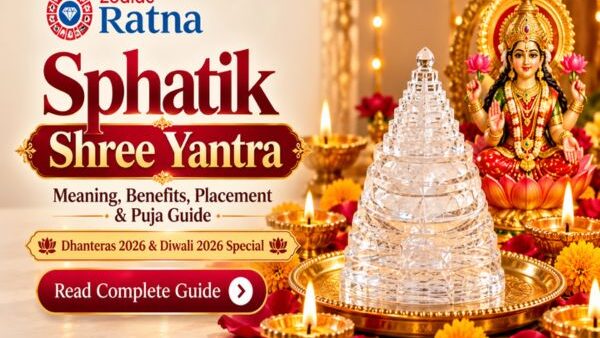
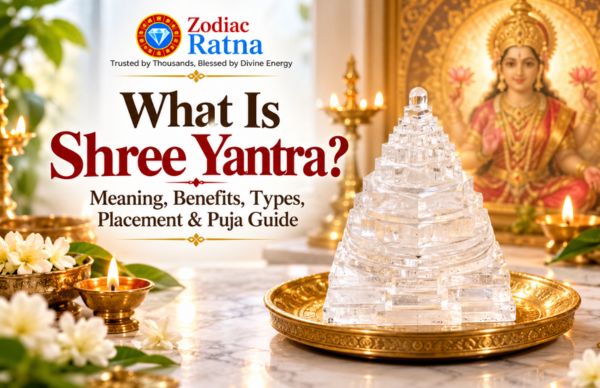
The Shree Yantra, also known as Sri Yantra or Shri Chakra, is one of the most respected sacred geometric symbols used in Hindu spiritual traditions. Its distinctive design consists of interconnected triangles arranged around a central point known as the Bindu. The complete pattern is traditionally associated with the Divine Feminine, spiritual awareness, abundance and the harmonious relationship between different aspects of creation. For devotees, the Shree Yantra can be more than a beautiful geometric symbol. It may become a part of a Puja space, meditation practice or daily spiritual routine. Today, Shree Yantras are available in different forms, including 2D engraved designs, 3D Meru Shree Yantras, Sphatik Shree Yantras, brass Yantras and copper Yantras. If you are planning to bring a Shree Yantra into your home or office, this guide explains its traditional meaning, different forms, material options, placement, Puja Vidhi, mantra, maintenance and important considerations when purchasing one. For a detailed breakdown on clear quartz properties and care, read our complete Sphatik Shree Yantra Guide.
What Is Shree Yantra?
A Yantra is traditionally used as a sacred geometric representation and as a visual aid for worship and meditation. Among the many Yantras found in Hindu spiritual traditions, the Shree Yantra holds a particularly important place. Its central design is formed from nine interconnected triangles. These triangles are arranged around the central Bindu, creating a highly intricate geometric pattern. The design traditionally represents the relationship between Shiva and Shakti, often understood as complementary divine principles. The Shree Yantra is also closely connected with Goddess Lalita Tripura Sundari in Shri Vidya traditions.
Because of its spiritual and symbolic significance, devotees may use a Shree Yantra for:
- Puja
- Meditation
- Mantra practice
- Spiritual contemplation
- Creating a dedicated worship space
- Traditional prosperity-related worship
Shree Yantra Meaning
The meaning of Shree Yantra can be understood through its different geometric elements. At the centre is the Bindu, surrounded by layers of triangles, lotus petals and the outer boundary. Rather than viewing the Yantra only as a decorative object, traditional practitioners regard its geometry as a representation of the relationship between the individual, the Divine and the wider cosmos. The name itself is commonly associated with auspiciousness, prosperity and spiritual reverence.
For many devotees, keeping or worshipping a Shree Yantra is therefore connected with creating an environment dedicated to prayer, concentration, devotion and abundance-consciousness.
Understanding the Shree Yantra Geometry
The intricate appearance of the Shree Yantra is one of the reasons it has attracted so much attention over centuries.
The Bindu
The Bindu is the central point of the Shree Yantra. It acts as the visual centre of the entire design and is traditionally associated with the source or focal point of creation and consciousness. During meditation or worship, practitioners may use the Bindu as a point of concentration.
The Nine Triangles
The central pattern contains nine interrelated triangles. Some triangles point upward while others point downward. In traditional interpretations, these two directions are associated with Shiva and Shakti, representing complementary aspects of divine consciousness. Their interconnection creates the distinctive structure of the Shree Yantra.
The 43 Triangles
The intersections of the primary triangles form a larger arrangement of smaller triangles. This central geometric structure is commonly described as containing 43 smaller triangles. These layers are traditionally connected with different aspects of spiritual symbolism and worship.
The Lotus Design
The Shree Yantra also contains lotus-petal formations around its central geometric structure. The lotus has deep symbolic importance in Indian spiritual traditions and is commonly associated with purity, consciousness and spiritual development.
The Outer Square or Bhupura
The outermost portion of the Shree Yantra is generally represented by a square boundary with gateways. This structure is traditionally known as the Bhupura. Together, the Bindu, triangles, lotus formations and outer enclosure create the complete sacred diagram.
Shree Yantra and Goddess Lalita Tripura Sundari
The Shree Yantra has a particularly strong association with Goddess Lalita Tripura Sundari within the Shri Vidya tradition.
The Goddess is revered as a form of the Divine Feminine, and the Shree Yantra serves as an important representation within this spiritual system.
Devotees following this tradition may incorporate the Yantra into:
- Daily worship
- Meditation
- Mantra practice
- Special Puja
- Festival worship
- Spiritual contemplation
Those following a particular Shri Vidya lineage should follow the practices and instructions given by their Guru or spiritual teacher.
Traditional Benefits of Shree Yantra
The Shree Yantra is traditionally associated with prosperity, spiritual focus, harmony and devotional practice.
These benefits belong to the realm of traditional spiritual belief and should not be understood as guaranteed financial, medical or personal outcomes.
1. A Focus for Meditation
The detailed geometric structure provides a visual object for concentration and contemplation.
2. Traditional Association with Prosperity
The Shree Yantra is commonly connected with abundance and prosperity-related worship, particularly through its association with the Divine Feminine and Lakshmi-related practices.
3. Support for a Dedicated Puja Space
A Shree Yantra can become an important part of a home temple or personal altar.
4. Encourages Regular Spiritual Practice
Keeping a sacred object in a dedicated location can help create a consistent environment for prayer, meditation and mantra chanting.
5. Symbol of Balance
The interrelationship of the upward and downward triangles is traditionally viewed as a representation of complementary divine principles.
6. Spiritual and Devotional Significance
For devotees following particular Hindu traditions, the Shree Yantra can have deep religious and symbolic importance.
Different Types of Shree Yantra
Shree Yantras can differ in both form and material.
Some commonly available options include:
- 2D Shree Yantra
- 3D Meru Shree Yantra
- Sphatik Shree Yantra
- Brass Shree Yantra
- Copper Shree Yantra
- Parad Shree Yantra
The right choice depends on your intended use, preferred material, available space and spiritual practice.
2D Shree Yantra
A 2D Shree Yantra is a flat representation of the sacred geometric design.
It may be engraved or etched onto a metal plate or another suitable surface.
Because it is compact, a 2D Yantra can be convenient for:
- Home Puja
- Office Puja
- Meditation spaces
- Small altars
- Sacred wall or shelf displays
Its flat format also makes it relatively easy to position in smaller spaces.
3D Meru Shree Yantra
A 3D Meru Shree Yantra, often called a Maha Meru, presents the sacred geometry in a raised three-dimensional form.
The Meru form is traditionally associated with Mount Meru, an important symbolic cosmic mountain in Indian religious traditions.
Because of its three-dimensional structure, a Meru Shree Yantra is often selected as a central feature of a dedicated Puja or meditation area.
2D vs 3D Meru Shree Yantra
People often ask whether they should purchase a 2D or 3D Shree Yantra.
There isn’t one answer that applies to every person.
| Feature | 2D Shree Yantra | 3D Meru Shree Yantra |
| Design | Flat | Three-dimensional |
| Space | Compact | Requires more space |
| Appearance | Engraved/flat geometry | Raised geometric structure |
| Suitable for | Home, office, compact altar | Dedicated Puja/meditation space |
| Maintenance | Generally simple | Requires careful handling |
| Visual presence | Subtle | More prominent |
Which one should you choose?
Choose based on your space, preferred appearance and worship practice, rather than simply choosing the one marketed as the “most powerful.”
Sphatik Shree Yantra
A Sphatik Shree Yantra combines the traditional sacred design with natural Sphatik/crystal material.
Its clear appearance makes it particularly popular among devotees looking for a visually distinctive Yantra for their home temple or meditation area.
Sphatik Shree Yantras are available in different sizes and designs, so buyers should check the actual dimensions, weight, material details and product specifications before purchasing.
Explore Sphatik Shree Yantra at Zodiac Ratna
Brass Shree Yantra
Brass has traditionally been used for many Hindu Puja articles and sacred objects.
A Brass Shree Yantra can be a practical choice for regular worship because of its traditional appearance and durable metal construction.
It can be used in:
- Home temples
- Office Puja spaces
- Shops
- Business establishments
- Meditation areas
Copper Shree Yantra
Copper is another traditional material used for religious and ritual objects in India.
A Copper Shree Yantra can be selected by devotees who prefer a traditional metal Yantra for their worship space.
When buying one, check the product’s stated material and manufacturing details rather than relying only on generic descriptions.
Parad Shree Yantra
Parad is the traditional Indian term associated with mercury.
Parad-based spiritual products are specialised products, and buyers should pay particular attention to the seller’s description, authenticity information and material details.
If you are considering a Parad Shree Yantra, choose a seller who clearly explains the nature of the product and provides appropriate documentation where applicable.
Which Shree Yantra Is Suitable for Home?
The right Shree Yantra depends on your personal preference and intended use.
Sphatik Shree Yantra
Suitable for devotees who prefer a crystal-based Yantra and want a visually distinctive piece for their Puja or meditation area.
Brass Shree Yantra
A traditional metal option suitable for regular worship.
Copper Shree Yantra
A traditional choice for devotees who prefer copper religious articles.
3D Meru Shree Yantra
Suitable when you have a dedicated altar and prefer a three-dimensional design.
2D Shree Yantra
A convenient choice when space is limited or a flat Yantra is preferred.
Where Should You Place Shree Yantra?
Placement practices can differ depending on the Vastu tradition or spiritual lineage being followed.
The North-East, traditionally called Ishaan Kona, is commonly recommended for a Puja or spiritual area.
Regardless of direction, focus on maintaining a clean and respectful environment.
Practical placement guidelines
- Keep the Yantra on a clean and elevated surface.
- A dedicated Puja area is preferable.
- Avoid placing it directly on the floor.
- Keep the surrounding area clean.
- Avoid placing heavy objects on or over the Yantra.
- Use a clean cloth beneath it if this is part of your worship practice.
- Follow the orientation recommended by your family tradition or spiritual teacher.
There is no need to treat one direction as a guaranteed method of attracting wealth. The purpose of the placement is to create a dedicated and respectful environment for worship.
Shree Yantra Placement in Office or Shop
A Shree Yantra may also be incorporated into an office or business environment as part of a spiritual setup.
Possible locations include:
- Office Puja area
- Reception-area spiritual display
- Dedicated shelf
- Personal work altar
- Meditation space
If you are following a specific Vastu system for your business premises, consider consulting a qualified Vastu professional who can assess the actual layout.
How to Install a Shree Yantra at Home
The exact installation method depends on the tradition being followed.
For a simple devotional setup, you can prepare the Yantra as follows:
Step 1: Clean the Puja Area
Clean the area where the Yantra will be placed.
Step 2: Prepare the Surface
Place a clean cloth or suitable Puja platform.
Step 3: Position the Yantra
Place the Shree Yantra carefully on the prepared surface.
Step 4: Light a Diya
Light a clean diya and offer incense according to your customary practice.
Step 5: Offer Flowers
Offer fresh flowers and other appropriate Puja items.
Step 6: Chant Your Mantra
Recite your chosen mantra with attention and devotion.
Step 7: Complete Your Prayer
Spend a few moments in meditation or prayer before completing the Puja.
For a formal Pran-Pratishtha, follow the instructions of a qualified priest or the tradition you follow.
Simple Shree Yantra Puja Vidhi
A simple home worship routine may include:
- Take a bath and wear clean clothes.
- Clean the Puja space.
- Place the Shree Yantra respectfully.
- Light a diya.
- Offer flowers.
- Offer incense.
- Offer fruits or suitable Naivedya.
- Chant the chosen mantra.
- Meditate for a few minutes.
- Complete the Puja with Aarti or your customary prayer.
If you belong to a specific spiritual lineage, its prescribed method should take priority over a generic online procedure.
Shree Yantra Mantra
One commonly used mantra for Lakshmi-related worship is:
ॐ श्रीं ह्रीं श्रीं महालक्ष्म्यै नमः
Om Shreem Hreem Shreem Mahalakshmyai Namah
Devotees may include this mantra in their regular prayer practice.
The appropriate mantra, number of repetitions and ritual procedure can vary according to the spiritual tradition being followed.
How to Clean a Shree Yantra
The cleaning method should always take the material into consideration.
Metal Yantras
Brass and copper Yantras can be gently cleaned according to the care requirements of the particular metal.
Sphatik Yantras
Handle Sphatik carefully. A gentle cleaning with clean water and a soft cloth may be appropriate.
Avoid:
- Abrasive cleaners
- Hard scrubbing
- Harsh chemicals
- Sudden temperature changes
If your Yantra came with specific care instructions, follow those instructions.
What If a Sphatik Shree Yantra Cracks or Breaks?
Natural Sphatik can contain internal lines, inclusions and variations.
A visible natural inclusion does not necessarily mean that the product is damaged.
If a Sphatik Shree Yantra is significantly cracked, chipped or broken, many devotees choose to respectfully retire it according to their family or spiritual tradition.
Some traditions may recommend Visarjan, while others may follow a different method.
There is no need to assume that one disposal practice applies to every Hindu tradition.
What Is Pran-Pratishtha for a Shree Yantra?
Pran-Pratishtha refers to a traditional ritual process through which a sacred object is consecrated for worship.
Depending on the tradition, such a process may involve:
- Mantra chanting
- Invocation
- Puja
- Offerings
- Abhishekam
- Specific ritual procedures
The exact process can differ between traditions and types of Yantras.
Therefore, if you specifically want a Pran-Pratishthit Shree Yantra, confirm with the seller what ritual service is actually included with your purchase.
Dhanteras & Diwali 2026: When to Bring Home a Shree Yantra?
Dhanteras and Diwali are particularly important occasions for Lakshmi and prosperity-related worship.
- Dhanteras 2026
- Friday, 6 November 2026
- Diwali / Lakshmi Puja 2026
- Sunday, 8 November 2026
Devotees who wish to bring a Shree Yantra home during this period can prepare their Puja space before the festival. The exact Puja Muhurat varies according to location, so Ahmedabad, Mumbai, Delhi and other cities may have different timings. For an exact Muhurat, always check a location-specific Panchang before performing the Puja.
Shree Yantra Puja During Diwali
A Shree Yantra can be incorporated into your Diwali worship along with:
- Goddess Lakshmi Puja
- Lord Ganesha Puja
- Diyas
- Flowers
- Incense
- Naivedya
- Lakshmi mantra chanting
Keep the Yantra on a clean and elevated Puja surface and follow the worship procedure appropriate to your tradition.
How to Choose an Original Shree Yantra Online
When purchasing a Shree Yantra, don’t choose solely because a seller describes it as “most powerful” or “best.”
Instead, look at the actual product information.
Check the Material
Confirm whether the product is:
- Sphatik
- Brass
- Copper
- Parad
- Another material
Check the Size
Always look at the exact dimensions and weight where provided.
Check the Design
For a 3D Meru Yantra, examine the structure, workmanship and finishing.
Check Authenticity Information
If the seller provides certification or laboratory documentation, check what exactly has been tested or certified.
Check Energisation Details
If you want an energised Yantra, confirm whether Pran-Pratishtha or Vedic Puja is included.
Check Seller Information
A transparent seller should clearly explain:
- Material
- Size
- Weight
- Product specifications
- Certification where applicable
- Puja/energization service
- Shipping
- Return policy
Shree Yantra at Zodiac Ratna
At Zodiac Ratna, we offer Shree Yantra options for devotees looking for sacred products for their home, office or Puja space.
Our Shree Yantra range includes Sphatik and other traditional Yantra options, with product-specific details provided on individual product pages.
If you are looking for a particular size, material or form, review the product specifications carefully before placing your order.
Explore Sphatik Shree Yantra at Zodiac Ratna
For guidance regarding a particular Yantra, you can contact the Zodiac Ratna team before ordering.
Frequently Asked Questions About Shree Yantra
Find answers to common questions about Shree Yantra, including its meaning, traditional benefits, types, placement, worship, cleaning, Dhanteras and commonly used mantras.
What is Shree Yantra?
Shree Yantra is a sacred geometric diagram traditionally used for worship, meditation and spiritual practice. It consists of nine interconnected triangles arranged around a central Bindu.
Is Shree Yantra and Sri Yantra the same?
Yes. Shree Yantra, Sri Yantra and Shri Chakra are commonly used names for the same sacred geometric tradition, although transliterations can differ.
What are the traditional benefits of Shree Yantra?
Shree Yantra is traditionally associated with prosperity, spiritual focus, meditation, harmony and Divine Feminine worship. These are traditional spiritual beliefs and should not be considered guaranteed financial or personal outcomes.
Which Shree Yantra is suitable for home?
Sphatik, brass, copper, 2D and 3D Meru Shree Yantras can all be considered depending on your space, material preference and worship tradition.
Is 3D Meru Shree Yantra better than 2D?
Neither should automatically be described as universally better. A 3D Meru Yantra provides a raised three-dimensional structure, while a 2D Yantra is compact and convenient for many spaces.
Where should I place Shree Yantra?
The North-East or Ishaan area is commonly recommended for a Puja space in Vastu practices. However, placement traditions can vary.
Can I keep Shree Yantra in my office?
Yes. It can be kept in a clean and respectful Puja or spiritual area within an office or business premises.
Can women worship Shree Yantra?
Yes. Women can worship the Shree Yantra. However, particular ritual rules may differ between families, traditions and spiritual lineages.
How should I clean Shree Yantra?
The cleaning method depends on the material. Metal and Sphatik Yantras should be cleaned carefully using methods appropriate for the material.
Can I bring Shree Yantra home on Dhanteras?
Yes. Dhanteras is traditionally associated with auspicious purchases and prosperity-related worship. In 2026, Dhanteras falls on 6 November.
Which mantra is used for Shree Yantra?
A commonly used Lakshmi mantra is:
ॐ श्रीं ह्रीं श्रीं महालक्ष्म्यै नमः
Om Shreem Hreem Shreem Mahalakshmyai Namah
Specific mantras and ritual practices may differ according to tradition.
Final Thoughts
The Shree Yantra brings together sacred geometry, symbolism and devotional practice in a form that has remained important within Hindu spiritual traditions.
From the central Bindu and interconnected triangles to the surrounding lotus formations and outer boundary, each element contributes to the symbolism of the complete Yantra.
Whether you choose a 2D Shree Yantra, 3D Meru Shree Yantra, Sphatik Shree Yantra or traditional metal Yantra, consider the material, workmanship, size, intended use and the spiritual tradition you follow.
For Dhanteras and Diwali, the Shree Yantra can also become part of a dedicated Lakshmi-Ganesha Puja and home worship setup.
Most importantly, choose a Yantra from a transparent and trustworthy source and follow a worship method that is appropriate for your own tradition.
🙏 May Goddess Lakshmi bless your home with peace, wisdom, harmony and abundance.